
FORTUNE CREDIT
Catalyzing Economic Empowerment of the Kenyan Rural Population
In October 2024, AlphaMundi Group (AMG), through its SocialAlpha-Bastion Investment Fund (SAIF), made a strategic investment in Fortune Credit, a women-led microfinance institution transforming the lives of underserved communities in Kenya’s rural and peri-urban areas.
This business case highlights how, since its founding in 2014, Fortune Credit has provided over USD 10M in loans to more than 50,000 active borrowers, delivering innovative financial solutions that empower small businesses, enhance livelihoods, and drive sustainable development with a strong impact on youth and women.
1. Company Overview
Fortune Credit Ltd. was founded in 2014 by Janet Kuteli as a microfinance institution dedicated to economic growth in Kenya’s rural and peri-urban regions. The company’s core mission is to promote economic empowerment within the rural population by offering a range of financial services, including savings, credit, and insurance. These services are designed to facilitate access to innovative financial products and services, aiming to generate both economic and social impact.
The company serves smallholder farmers, small traders, pastoralists in arid and semi-arid areas (ASAL), and youth engaged in the bodaboda (motorbike taxi) industry. Fortune Credit holds a license as an insurance agency, enabling it to also provide insurance services to its target demographic, thereby contributing to their financial security.

Fortune Credit CEO, Janet Kuteli together with Board Member, Bernard Mwonyonyo during the opening of a new branch in Nyeri County, Kenya.
By offering flexible terms, mobile repayment options, and non-traditional collateral, the company bridges the financial inclusion gap that prevents many micro, small, and medium enterprises (MSMEs) from achieving their full potential.
As of June 2023, the company operates with a network of 6 branches across 20+ counties in Kenya and has a customer base of over 20,000 active borrowers. Its dedication to women and youth empowerment is evident: 58% of its loans are issued to women, and 43% of its MSMs’ board members are female.
2. The Challenge: The Financing Gap for MSMEs in Rural Kenya
According to the 2021 Financial Access Household Survey by the Central Bank of Kenya and the Kenya National Bureau of Statistics, formal financial service access in Kenya rose from 26.7% in 2006 to 83.1% in 2021, driven by mobile money and digital credit expansion1.
Despite the significant progress made in enhancing access to formal financial services and products in Kenya, there are still persistent gaps and challenges that affect the financial inclusion of various segments of the population, especially the youth and the rural dwellers.
Young people, comprising 35% of Kenya’s population and 60% of the labor force, face higher unemployment and poverty. In 2021, only 75.6% of youth had formal financial access, compared to 86.1% for adults aged 35-64. Barriers include a lack of documents, collateral, credit history, financial literacy, and suitable financial products, among others.
Rural areas, with 74% of Kenya’s population and 80% of the poor, exhibit lower financial inclusion (79.5% in 2021 vs. 90.4% in urban areas). Barriers include inadequate infrastructure, irregular income, high transaction costs, low financial literacy, and limited product diversity.
Micro, Small, and Medium-sized Enterprises (MSMEs) in Sub-Saharan Africa are the backbone of the economy, comprising 90% of all private sector businesses and supplying employment to almost 80% of the region’s workforce. These enterprises boost economic development, create jobs, and cut poverty. The region is home to approximately 44 million MSMEs with a significant proportion of them operating in rural and peri-urban areas.

Fortune Credit CEO, Janet Kuteli together with Board Member, Bernard Mwonyonyo during the opening of a new branch in Nyeri County, Kenya.
Around 51% of these MSMEs need more funds than they can currently access, which in turn limits their capacity to invest in growth opportunities and increase their scale of operations. This financial shortfall leads to lower job creation and hinders the overall economic development of the region.
3. The Solution: Fortune Credit’s Tailored Financing Solutions
The goal of Fortune Credit is to enhance the lives of residents in underserved areas by supporting sustainable low-income businesses. The organization’s solutions are strategically crafted to guarantee quick access to creative financial products and services, with a focus on measurable economic and social impact. Success is assessed through metrics like increased incomes, resilience, and the sustainability of the targeted communities.
Fortune Credit’s Theory of Change presents a comprehensive plan to support individuals aged 18 to 35, with a particular focus on women. This initiative aims to enhance capacity building, financial inclusion, financial literacy, value-added services, advocacy, empowerment, and the development of products designed to reduce poverty and promote small-scale industries.
The company’s business model is grounded in a robust risk evaluation framework and a thorough understanding of the socio-economic and cultural contexts in which it operates. Notably, the company takes pride in its market leadership in effectively lending against non-traditional forms of collateral, such as chattels on movable property and social guarantees in a group lending model.
Fortune Credit operates in over 20 counties through a network of 6 branches, serving customers with an active borrower base of over 20,000. The institution enhances financial inclusion by providing non-traditional collateral, flexible repayment terms, and convenient registration and loan repayment through mobile channels. Over the years, the company has shown considerable progress, lending over USD 10M to its clients.
Products
The company offers a diverse range of financial products tailored to meet the needs of underserved communities and specific market segments. These include:
- Agri-Business Loans: Tailored financing solutions for farmers and agricultural value chain actors to enhance productivity, including dairy farming, poultry farming, and cereal production.
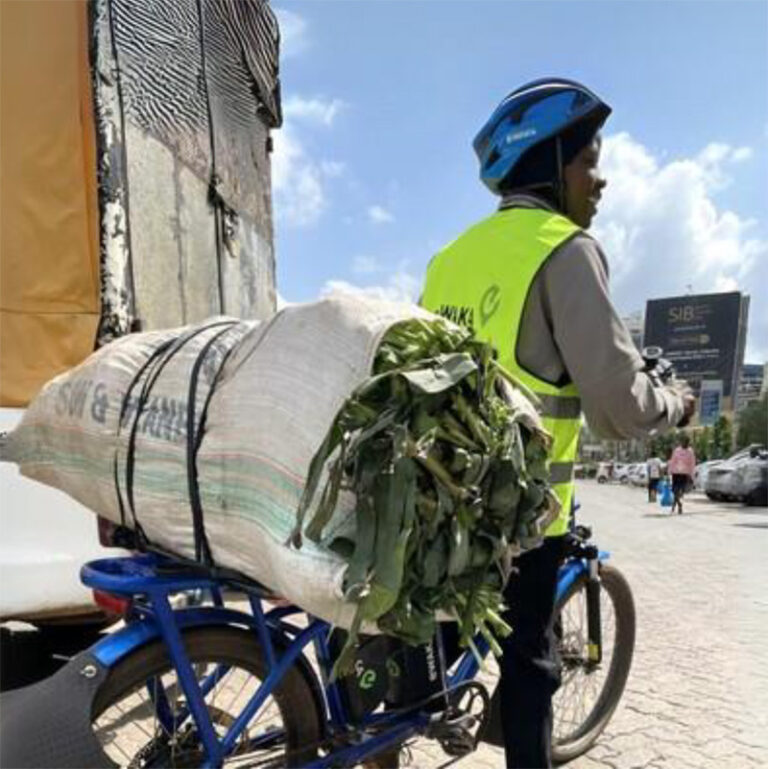
- Boda-Boda Loans: Motorcycle financing for riders to support transportation businesses and obtain safety gear.
- eMobility Loans: Financing solutions to acquire e-motos and e-bikes.
- Clean Energy Loans: Funding rural households to access clean cooking, clean lighting, and cooling solutions powered by solar energy.
- Soko Loans and Small Trader’s Working Capital: Short-term working capital for small-scale market traders to manage cash flow and stock goods.
- Edu-Finance Loans: Financial solutions designed for clients to borrow school fees loans with money sent directly to the school/ institution bank account and school improvement loans for low-cost private schools.
Competitive advantages
Its main competitive advantages are:
- The Village-based Champion Model: This is a peer-to-peer knowledge transfer channel model leveraging local communities’ trusted social structures through a network of rural agents to ensure clients get support and training on good agricultural practices, financial literacy, and insurance.
- Key Strategic Partnerships: The company has established strong relationships with key partners including aggregators and off-takers in the agricultural value chain, green energy, logistics, and insurance companies.
Fortune Credit works with various partners like eWAKA Mobility and eBee Africa to promote e-mobility through innovative financial products and tailored financing options. Furthermore, its partnership with Access and Move Limited supports solar energy use, improving access for low-income groups and MSMEs throughout Kenya.
The Company has gained significant recognition for its important work in financial inclusion and sustainable growth. It was chosen as a semi-finalist in the notable MIT Solve 2024 Global Economic Prosperity Challenge, showcasing its creative solutions for stimulating economic progress. Furthermore, Fortune Credit was named one of three finalists for the 2023 European Microfinance Award in the area of Inclusive Finance for Food Security and Nutrition, emphasizing its dedication to tackling significant global issues.

Fortune Credit provides financing for motorcycle transportation businesses and eMobility solutions.
4. AlphaMundi’s Contribution
In October 2024, AlphaMundi Group (“AMG”), through its SocialAlpha-Bastion Investment Fund (“SAIF”), made its strategic debt investment in Fortune Credit Ltd.
SAIF’s investment will provide Fortune Credit with the necessary capital to expand its loan book, enabling the company to issue more loans and support a larger customer base.
This funding will help accelerate growth by increasing the company’s lending capacity, improving financial inclusion, and enhancing its market presence. The company will be able to scale its operations efficiently while maintaining strong portfolio performance and risk management strategies.
SAIF’s investment represents not only a commitment to promoting financial inclusion but also a proof of the powerful effect of empowering rural communities, women, and youth. We believe this partnership will produce significant economic and social results, ensuring that more Kenyans can access the funds they need to improve their livelihoods.
5. Impact Achieved
The impact of Fortune Credit’s strategic approach to financial inclusion in rural and informal sectors is significant, especially on youth and women. By focusing on these specific client segments, the company addresses a critical need in underserved communities. The reliance on group models ensures a higher level of financial discipline among clients, leading to timely payments. This, in turn, contributes to the overall financial sustainability of the company.
Moreover, the holistic strategy employed by Fortune Credit, which includes tailoring financial products with flexible terms, supporting value chain development, and enhancing the policy environment, creates a positive ripple effect. The customized offerings cater to diverse needs, fostering economic opportunities within these communities.
Success is assessed through metrics like increased incomes, resilience, and the sustainability of the targeted communities.
Impact highlights as of 31.12.2024:
Clients and beneficiaries
- 21,295 clients (61% female, 58% rural)
- 8,374 direct beneficiaries
- 90% of beneficiaries receive training
Employees
- 83 permanent employees (59% female)
- 53% female senior management
- 43% female directors
- 50% female founders
Fortune Credit’s business model aligns with the following SDGs:

SDG 1: No Poverty and Zero Hunger. Supports underserved groups by providing financial services, decreasing poverty, and enhancing financial stability.

SDG 4: Quality Education. Supports students to access quality Education in a dignified school environment.

SDG 5: Gender Equality. Encourages economic empowerment and leadership roles for women as borrowers, staff, and board members. It is female founded, with 42% of board members and 54% of total workforce being women. 60% of their loans are issued to women.

SDG 9: Industry, Innovation, and Infrastructure. Facilitates growth of underdeveloped industries in marginalized areas of Kenya by creative lending methods and financial access.

SDG 10: Reduced Inequality – Alleviates economic inequalities by focusing on women, youth, and rural communities with inclusive financial options.
6. Looking to the Future
The company has set its sights on expanding its digital loan portfolio due to the more favorable profit margins it offers in comparison to its other product offerings. Furthermore, the company is aiming to bolster its non-funded revenue by capitalizing on commission income generated from the distribution of primarily third-party impact products and services.
The projections assume that the company will focus on increasing their lending base and growing the loan book.
The company’s growth strategy revolves around three primary drivers:
- Growth in client base: The company seeks to grow its active client base through strategic partnerships across Kenya.
- Leveraging new products: Diversification of the product base to serve more clients. It is adding scale with new revenue from tech-driven loan products for its MSME clients, including loans for green asset financing.
- Exponential growth in annual disbursements: The company projects disbursements to increase.
This in turn will translate to annual revenue growth, assuming a 12% YoY growth in disbursements taking into consideration the expected funding with the company’s pipeline. Page 7 of 8
7. About AlphaMundi Group Ltd
AlphaMundi Group (AMG), founded in 2008 in Switzerland, is a pioneer impact investment firm dedicated to fostering social inclusion and sustainable economic transformation in Africa and Latin America.
With local teams in Colombia and Kenya, AMG specializes in identifying and supporting scalable impact ventures that address social and environmental challenges aligned with the UN SDGs, including climate change, financial inclusion, sustainable agriculture, renewable energy, and affordable housing.
Since 2009, AMG has profitably invested USD 128M in 66 impact ventures across both regions, executing 326 venture debt and equity transactions through its SocialAlpha and AlphaJiri funds and related co-investments. AMG portfolio companies have impacted more than 10 million low-income beneficiaries, the vast majority in rural areas and some 40% of women. AMG is a certified B-Corp and a UNPRI signatory.
AlphaMundi also supports sustainable development through the AlphaMundi Foundation, a 501(c)(3) organization in Washington DC, by providing catalytic funding and technical assistance for small enterprises and promoting the Climate and Gender Lens agenda across AlphaMundi’s portfolio and pipeline companies.
For more information: www.alphamundigroup.com; www.alphamundifoundation.org
You can access the article here